Here’s what I’ve been working on recently:
Experience as an Empirical Object
A central goal of my work is to treat experience not as a background assumption, but as an empirical object: something that can be measured, modeled, and used to predict perception. Many theories of vision appeal to prior experience or natural statistics, but the relevant statistics are often left implicit. My work asks whether the physical structure of experience can be estimated directly from the visual and sensorimotor data available to an observer.
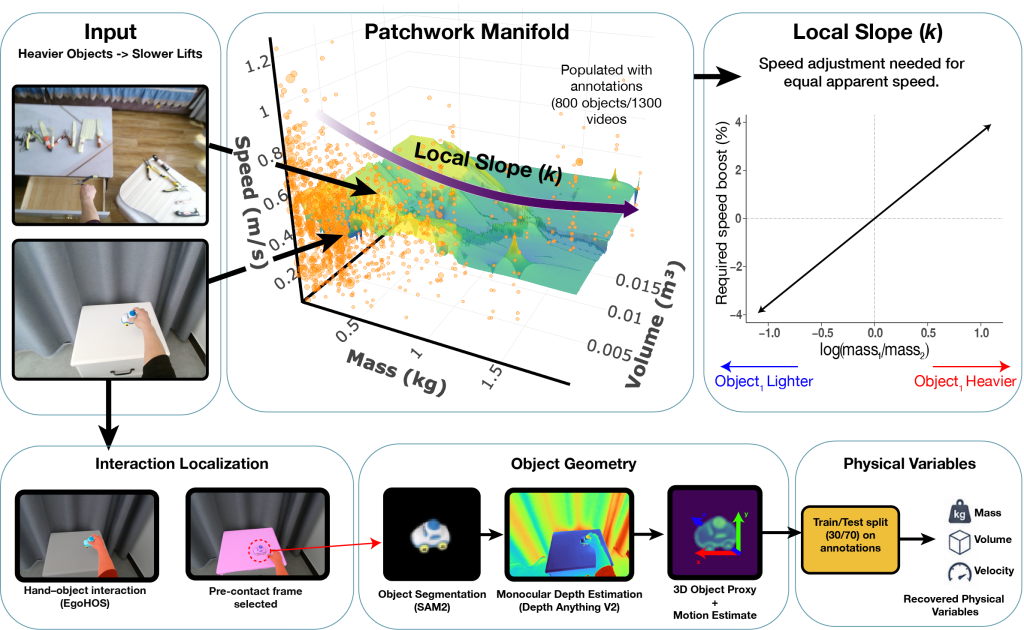
To do this, I combine naturalistic egocentric video, computer vision, and the Patchwork framework. In ongoing work, I analyze large-scale hand-object interaction videos to estimate the physical regularities people encounter during everyday object manipulation. Each interaction provides a sample of the relationship between object properties, such as mass and volume, and object dynamics, such as movement speed. These samples populate a Patchwork manifold: a measured space of physical experience in which local relationships can be used to generate perceptual predictions.
The same framework can also be made image-computable. Rather than relying only on manual annotations, I use computer vision tools to recover physical variables from visual input. Hand-object interactions are localized in egocentric video, pre-contact frames are selected to reduce occlusion, objects are segmented, monocular depth is estimated, and the resulting visual information is used to construct a 3D object proxy and motion estimate. These estimates are calibrated against annotated data to recover physical variables such as mass, volume, and velocity.
This makes it possible to move from images, to physical variables, to experienced regularities, to behavior. In recent work, the mass-motion relationship measured from natural hand-object interaction predicts several perceptual distortions: heavier-looking objects appear to move more slowly, larger objects appear slower in part because they imply greater mass, apparent mass changes perceived collision speed, and these motion distortions propagate into explicit judgments of relative mass. Across these cases, the goal is not simply to show that vision incorporates intuitive physics, but to explain where physical expectations come from and how their structure can be measured.
These image-computable features become coordinates in a Patchwork model: each interaction is a point in a multivariate space defined by object size, volume, speed, contact duration, and other behaviorally relevant dimensions. By comparing human judgments to predictions from this image-computable Patchwork, I can test how well real-world physical statistics captured from video explain intuitive physics.
Physical Perception and Action
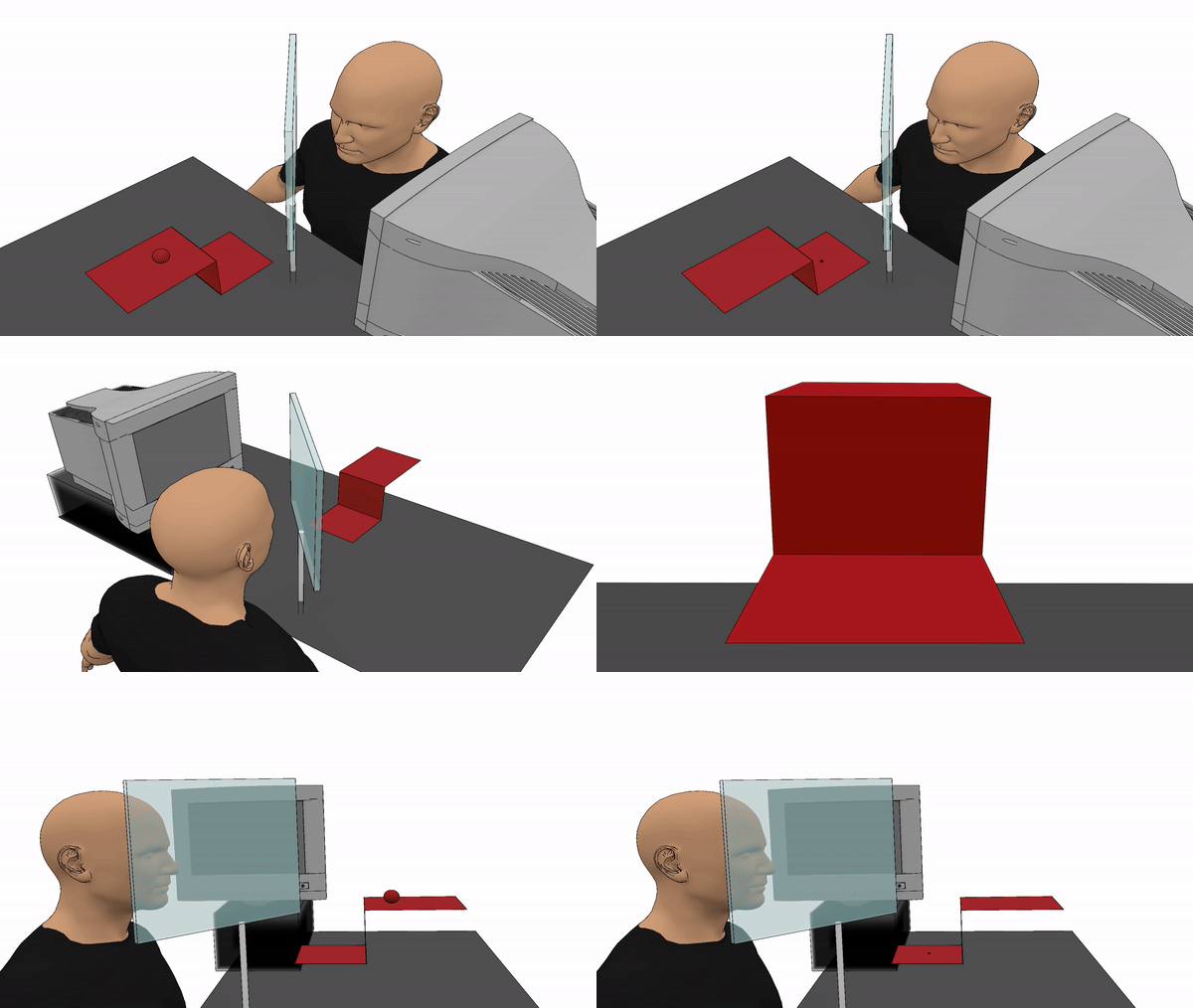
I use psychophysics, virtual reality, and motor measures to study how people perceive physical properties that are not directly visible, including mass, force, gravity, and causal dynamics. These studies ask how visual information about object motion shapes both what people see and how they prepare to act.
Research Highlights
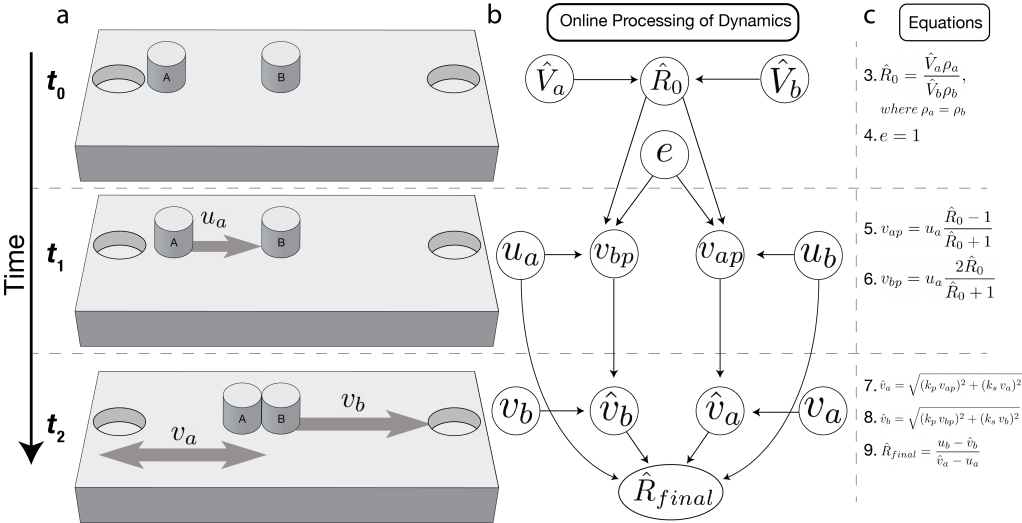
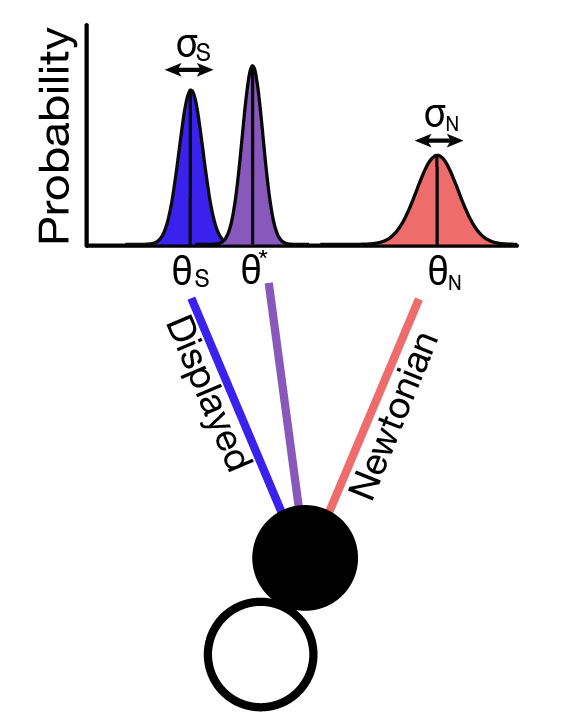
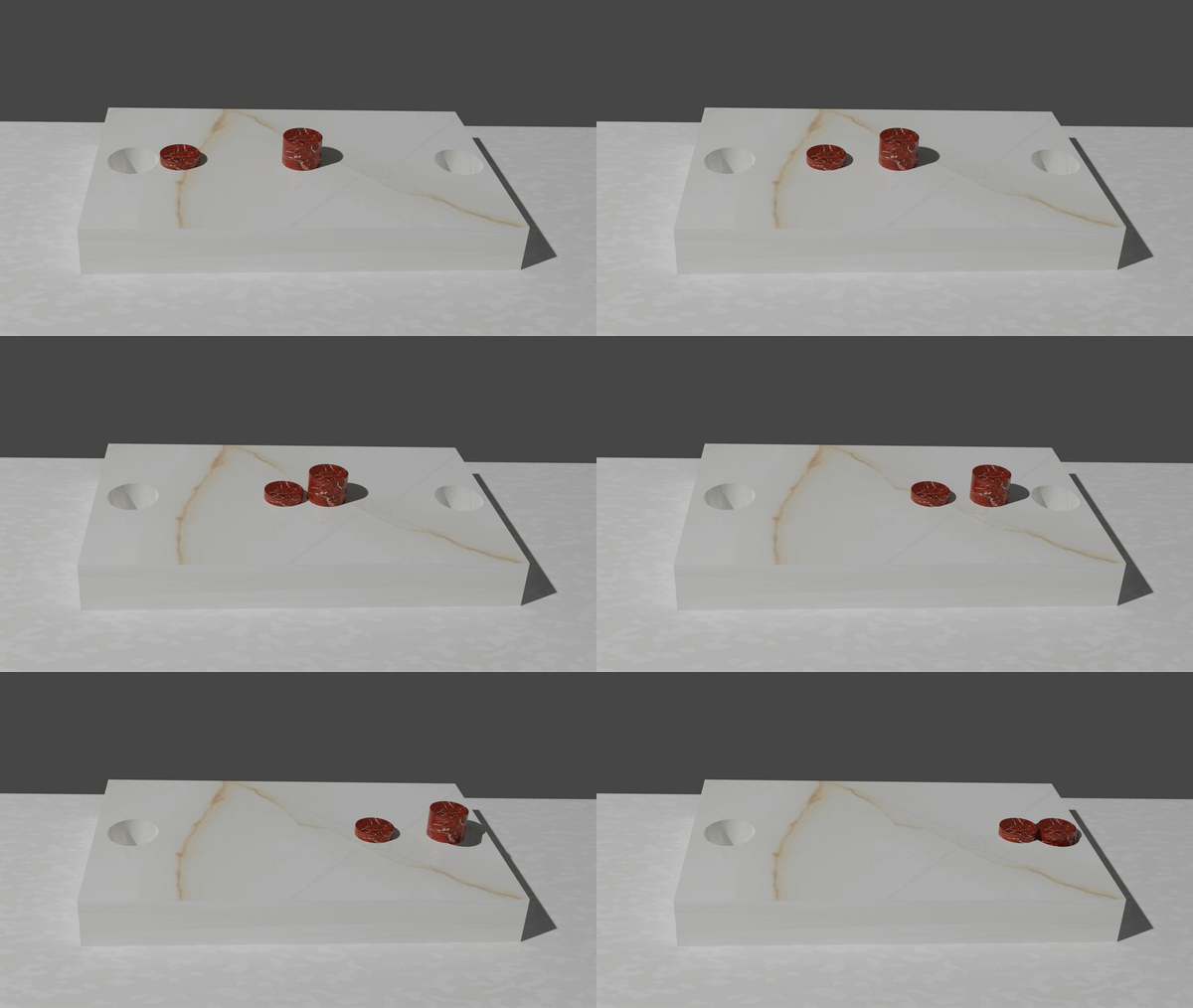
By integrating predicted mass with sensed initial velocity, the system generates a representation of momentum, enabling accurate predictions of post-collision velocities. This approach clarifies mechanisms behind motor object bias and phenomena like the size-speed illusion. Through empirical studies.
The Mass-Speed Illusion
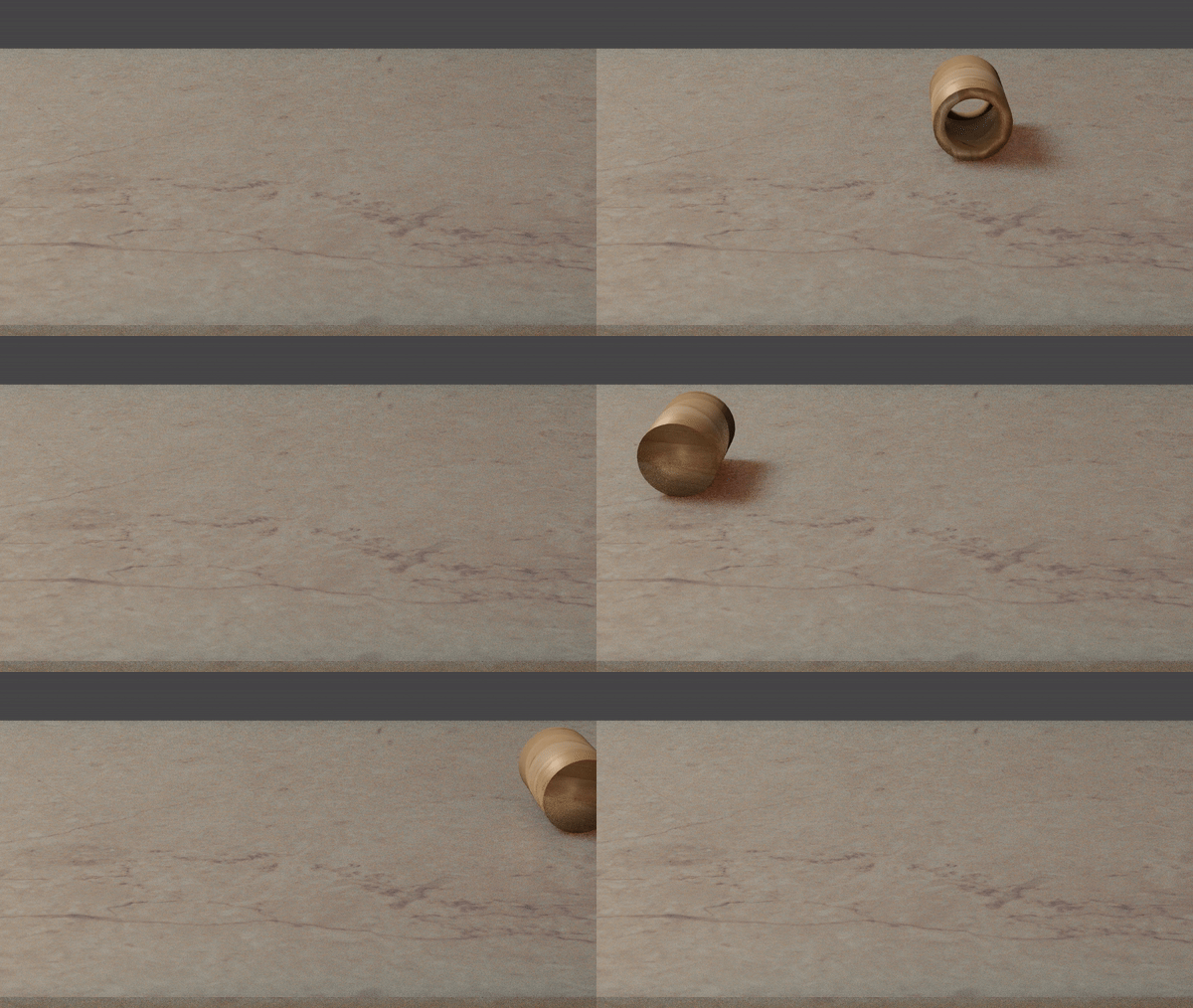
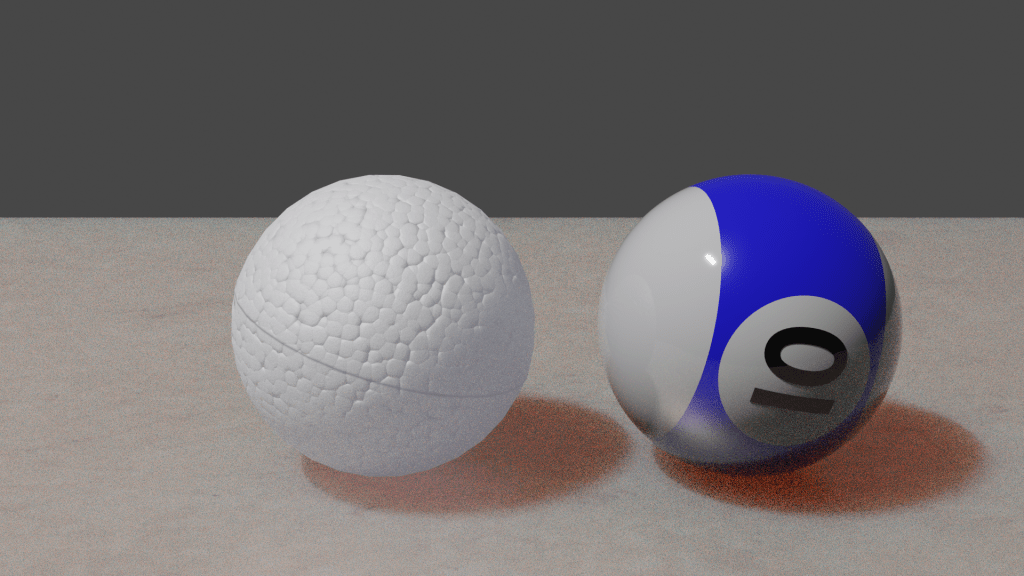
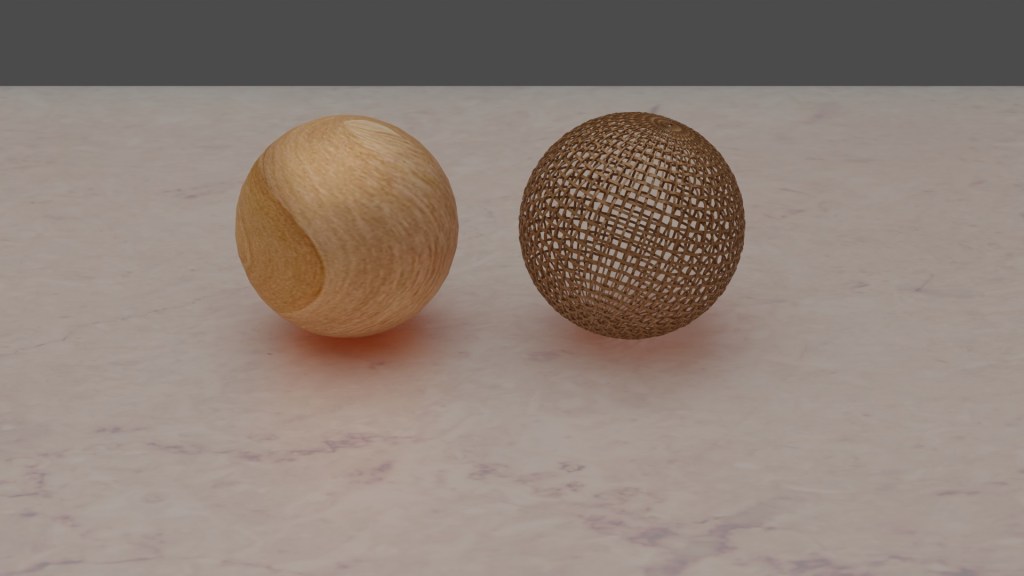
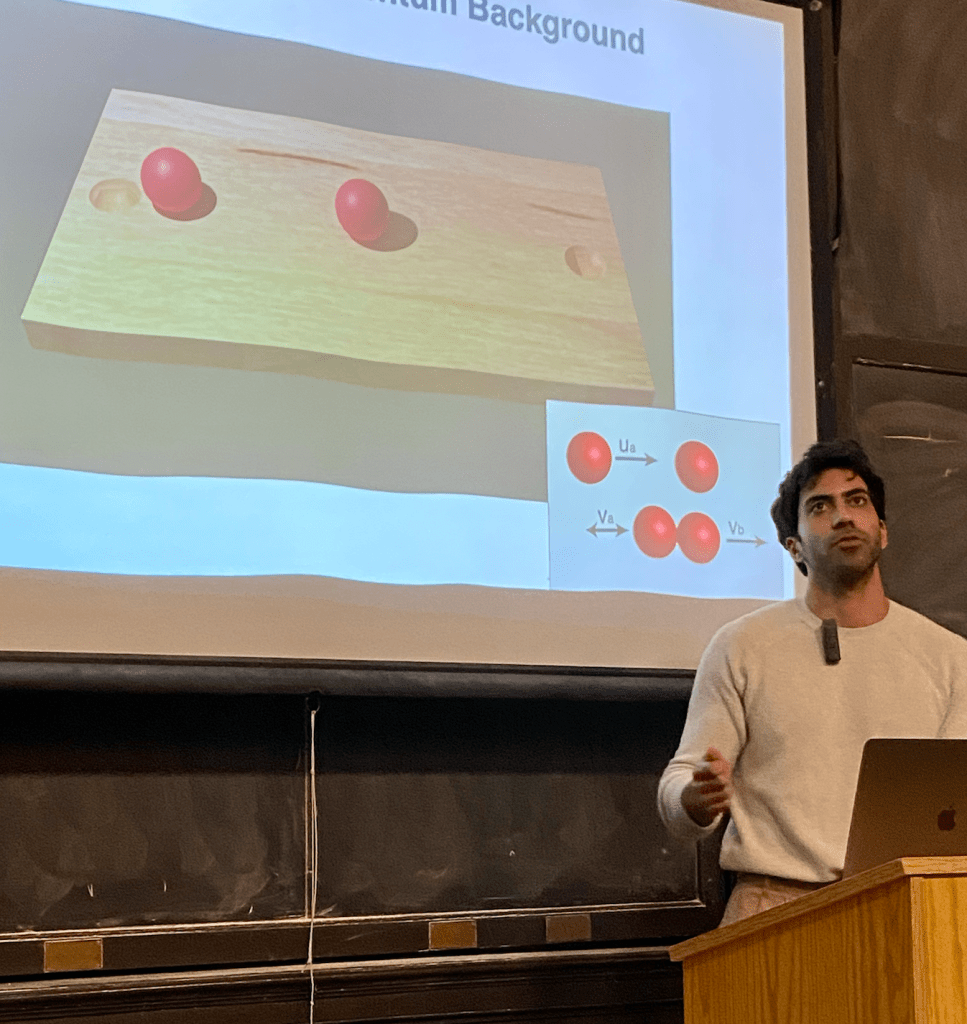
Heavier-looking objects appear to move more slowly than lighter-looking objects, even when their retinal motion is identical. This work shows that perceived speed is shaped by expectations about how massive objects typically move.
The Dynamic Weight Illusion
Visual dynamics can alter how heavy an object appears or feels. In virtual reality, I use collision events and action-based measures to test how visual physical expectations shape motor preparation and weight perception.
Models of Intuitive Physical Reasoning
The Online Processing of Dynamics (OPoD) model explains how people perceive dynamic physical events by proposing that mass and velocity are processed jointly over time. Rather than estimating mass only after a collision has unfolded, observers continuously update physical interpretations as event information becomes available.